The Spanish Colony was established in the 1920s on the shores of Raritan Bay by members of the Spanish Naturopath Society many of whom had fled fascism and were looking for a place to follow their principles of fresh air, vegetarian diet and exercise as a healthy alternative to modern medicine. Eventually, the camp evolved into an informal community of Spanish emigrants who were not SNS members but who paid the society rent for their campsites.


The seaside summer retreat included canvas tents on raised wooden platforms with open-air kitchens, common showers and a barn-like Salon at the center of the camp for musical performances and the annual Labor Day festival.


By the 1940s the tents were transformed into small summer bungalows; later many were winterized and became year-round residence.

 In the 1920s social reformer and Catholic Worker Movement co-founder Dorothy Day began spending time on the South Shore as a retreat from increasing disillusionment with her life as a radical journalist. After the birth of her daughter, Day converted to Catholicism and was baptized in a church nearby. Her conversion motivated Day to return to Manhattan in order to pursue a mission that synthesized both the Catholic and Labor movements. She dedicated her life to promoting better treatment of the poor by setting up camps, homeless shelters and distributing food to the needy. In 1972 Day returned to Raritan Bay -- the Catholic Worker had purchased three cottages from the SNS -- where she spent the last eight years of her life in the peaceful serene setting and communal air of the Camp. Day's candidacy for sainthood is still under review by the Vatican.


In 1997, against the will of most residents, descendants of the SNS founders sold the property for $7 million to developer John DiScala, including the three cottages owned by the Catholic Worker. Residents owned their homes, but the land was the property of the Naturopath Association. The residents were evicted, but the development was blocked by legal actions from preservation groups and former residents, and by refusal of the City Planning Department to issue permits for construction. The developer had promised to preserve the home Dorothy Day lived in, and a few sample cottages. However, her home and almost all the cottages were leveled by a bulldozer as the New York City Landmarks Preservation Commission was about to declare it a historic landmark. An expediter who illegally pulled the demolition permit was later indicted for forgery.
In 2006 DiScala's firm declared bankruptcy after only a handful of the planned 80 "Central Park East" mega-houses were built -- he is trying to sell the remaining vacant land to other developers.


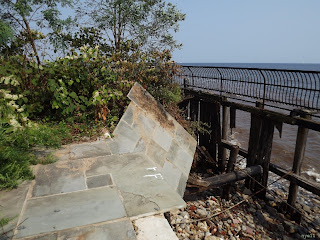
The remaining cottages that escaped the bulldozers


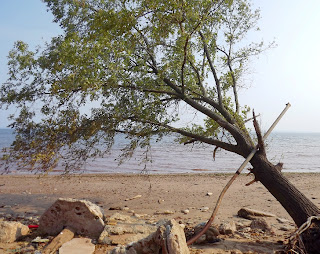
The lake and the beach strewn with construction debris




archival photos courtesy of: Jim O'Grady, The Municipal Arts Society, Staten Island Museum, jchiarella@pbase.com and the Staten Island Historian
all other photos copyright nycedges 2011-12


The seaside summer retreat included canvas tents on raised wooden platforms with open-air kitchens, common showers and a barn-like Salon at the center of the camp for musical performances and the annual Labor Day festival.

By the 1940s the tents were transformed into small summer bungalows; later many were winterized and became year-round residence.


In 1997, against the will of most residents, descendants of the SNS founders sold the property for $7 million to developer John DiScala, including the three cottages owned by the Catholic Worker. Residents owned their homes, but the land was the property of the Naturopath Association. The residents were evicted, but the development was blocked by legal actions from preservation groups and former residents, and by refusal of the City Planning Department to issue permits for construction. The developer had promised to preserve the home Dorothy Day lived in, and a few sample cottages. However, her home and almost all the cottages were leveled by a bulldozer as the New York City Landmarks Preservation Commission was about to declare it a historic landmark. An expediter who illegally pulled the demolition permit was later indicted for forgery.
In 2006 DiScala's firm declared bankruptcy after only a handful of the planned 80 "Central Park East" mega-houses were built -- he is trying to sell the remaining vacant land to other developers.


The remaining cottages that escaped the bulldozers


The lake and the beach strewn with construction debris


archival photos courtesy of: Jim O'Grady, The Municipal Arts Society, Staten Island Museum, jchiarella@pbase.com and the Staten Island Historian
all other photos copyright nycedges 2011-12